





28 de September de 2026
Innovación
Calidad y cadena alimentaria
Resiliencia y competitividad
A conference of the CAP Network analyzes how digitalization and the new BDporc platform can help the sector respond to the challenges of profitability, animal health, biosecurity, sustainability and generational renewal
A conference of the CAP Network analyzes how digitalization and the new BDporc platform can help the sector respond to the challenges of profitability, animal health, biosecurity, sustainability and generational renewal
The CAP Network conference held in Madrid presents the new BDporc platform, which transforms more than three decades of technical and production information into new analysis tools and decision support for pig farms.
Spain leads pork production in the European Union and ranks third worldwide.
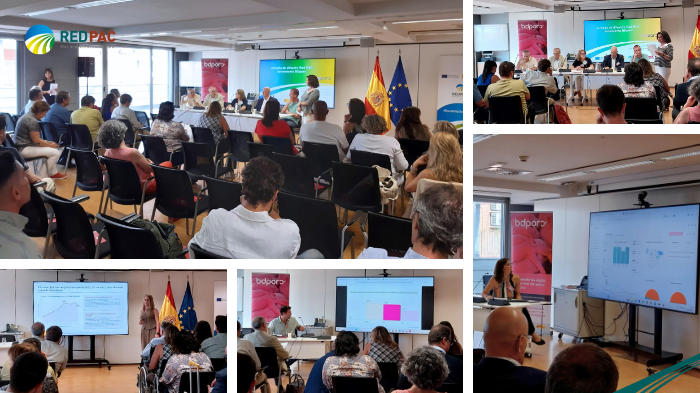
The Spanish pork sector has strength, but also significant challenges ahead. Maintaining its leading position depends on improving production, anticipating problems, and transforming the growing amount of available information into actionable decisions for farms. With this forward-looking perspective, the CAP Network brought together representatives from the sector, businesses, research institutions, and public administrations in Madrid on September 16th to present the new BDporc platform and discuss the potential of data and digitalization to enhance competitiveness, efficiency, and sustainability.
Spain enters this debate from a particularly relevant position. In 2025, it produced around 5.2 million tons of pork from approximately 56 million slaughtered animals, according to provisional data from the Ministry of Agriculture, Fisheries and Food (MAPA) . Production increased by nearly 6% in tonnage and almost 4% in the number of animals compared to the previous year, resuming its upward trend after several years of decline.
The figures place Spain as the leading pork producer in the European Union, accounting for 24% of EU production, ahead of Germany with 19.8%, and as the third largest producer worldwide, behind only China and the United States. This leadership helps to illustrate the economic, productive, and strategic importance of a sector that relies on foreign markets as another of its key drivers of competitiveness.
Behind these figures lies one of the key ideas that emerged throughout the day: the challenge facing the pork sector can no longer be understood solely in terms of volume. Profitability, animal health and biosecurity, generational renewal, the environment, and digitalization are all part of an increasingly complex equation in which producing better will be just as important as producing.
The European model also offers distinctive elements related to health guarantees, animal welfare, and environmental requirements. In Spain, improved efficiency and environmental sustainability are also seen as a competitive advantage for farms that must simultaneously meet market, societal, and regulatory demands.
In that context, one concept took center stage during the meeting: precision livestock farming . Measuring to understand, but above all, measuring to improve . Because the value of data doesn't end with explaining what has happened on a farm: the next step is to use that information to prevent, anticipate, and make better decisions.
The event was organized by the PAC Network together with the General Sub-Directorate of Livestock and Hunting Productions of the MAPA, and in collaboration with the Institut de Recerca i Tecnologia Agroalimentàries (IRTA) , the research organization that manages BDporc.
BDporc: More than 30 years of data now looking to the future
If data is becoming a strategic raw material for livestock farming, BDporc, the Spanish Swine Data Bank, has over three decades of experience. The platform, created in 1990 by IRTA with the support of the Ministry of Agriculture, Fisheries and Food (MAPA) and the National Association of Swine Producers ( ANPROGAPOR ), provides benchmark technical and production information to evaluate results, compare farms, and identify opportunities for improvement.
Its size gives an idea of its representativeness. The latest complete data available includes 575 farms, 490 for white pigs and 85 for Iberian pigs, and more than 917,000 breeding sows , which represents approximately half of the national census.
Now, the tool takes another digital leap.
The PAC Network event provided an opportunity to discover a revamped platform with an interactive interface, customized reports, and advanced comparative analysis and benchmarking functionalities, designed to facilitate the consultation, visualization, and use of information and adapt to the needs of different professional profiles.
It is not, therefore, simply a matter of accumulating more information. BDporc's evolution aims to translate data into knowledge applicable to farming operations and to support decisions related to production efficiency, sustainability, and business management itself. This transition, which featured prominently in much of the day's discussion, was precisely the one that shaped much of the day's debate: from data to information, and from information to anticipation.
And that's where the sector's overall figures and the data from each farm converge. Spain starts from a position of global leadership, but maintaining it will require the capacity to innovate, measure, compare, prevent, and anticipate. Digitalization and precision livestock farming open up new possibilities for achieving this.
The PAC Network event ultimately leaves us with a simple idea behind millions of data points: measure to improve and turn information into more effective decision-making.