





23 de June de 2026
Dinamización rural
Cambio climático y gestión de recursos naturales
Mujeres
Resiliencia y competitividad
Biodiversidad y paisaje
The PAC Network is organizing a technical conference in Madrid to present the status of the PEPAC Evaluation Plan and share five completed evaluations.
- The PAC Network is organizing a technical conference in Madrid to present the status of the PEPAC Evaluation Plan and share five completed evaluations.
- The meeting focused, among other topics, on simplification, digitalization, collaboration between administrations and shared learning for a more agile, useful and results-oriented CAP
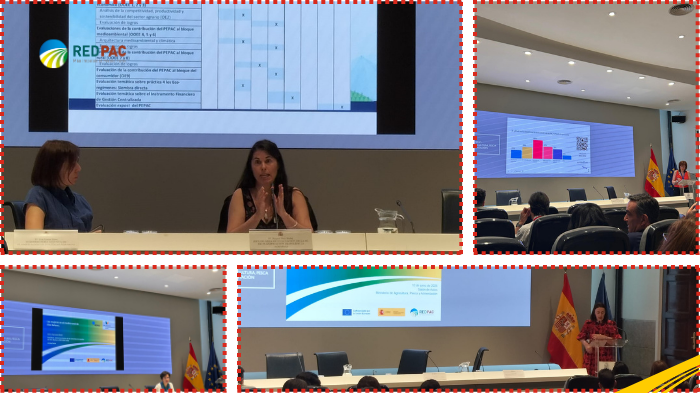
The evaluation of the Common Agricultural Policy (CAP) is becoming a key tool for better understanding what works, what can be improved, and how to more precisely target aid to the agricultural sector and rural areas. With this focus, the CAP Network held a CAP Evaluation Conference in Madrid on June 10th to present the progress of the Evaluation Plan , share results, and generate useful knowledge for the current implementation and future design of agricultural policy.
Evaluating the CAP: measuring, learning and improving
The event, held in the auditorium of the Ministry of Agriculture, Fisheries and Food ( MAPA ), brought together technical profiles linked to the evaluation, members of the monitoring committee of the CAP Strategic Plan 2023-2027 ( PEPAC ) and people involved in the management, monitoring and analysis of CAP interventions.
The main objective was to present the progress status of the PEPAC Evaluation Plan, as well as five evaluations already completed: three at the national level, carried out by the evaluation team of the PEPAC management authority, and two regional evaluations linked to the Rural Development Programs of the 2014-2022 period.
The evaluation makes it possible to demonstrate the progress and achievements of the CAP, to analyze its effectiveness, efficiency, relevance, impact and European added value, and to guide possible adjustments in the strategy, in the aid or in operational aspects of the CAP PEPAC.
An Assessment Plan for a more integrated CAP
During the session it was explained that the current period represents a significant step: for the first time, the evaluation addresses the CAP in an integrated way, incorporating both the first and second pillars.
The PEPAC Evaluation Plan covers the period 2023-2031 and includes mid-term evaluations, thematic evaluations and an ex-post evaluation planned at the end of the cycle, in order to assess the effects of the Strategic Plan in relation to the specific objectives of the CAP.
In addition, the changes made to the Evaluation Plan based on the experience gained were presented. These included adjustments to the schedule, the elimination of some tasks to avoid overlaps, and a greater focus on evaluations that generate useful and applicable information.
Simplification and digitization: moving towards a more agile CAP
The assessment on simplification The report analyzed the initial implementation of the PEPAC (Program for the Promotion of the Common Agricultural Policy) from the perspective of both beneficiaries and the Administration, with particular attention to digitalization, aid management, monitoring, evaluation, and governance. Among its main findings, it highlighted that digitalization can contribute to reducing administrative burdens, provided it is accompanied by greater interoperability, collaboration between administrations, and the use of databases and tools that are truly useful for those who manage or apply for aid.
The report also highlighted the importance of strengthening knowledge transfer, simplifying regulations, avoiding regulatory dispersion, and promoting a "one-stop shop" to facilitate procedures.
Digitization, yes, but useful and accessible.
The day highlighted a key idea: digitization is a great ally of simplification, as long as it is useful, interoperable and accessible to those who use it.
The recommendations presented included promoting interoperability between applications, increasing the use of data sources, improving information exchange agreements, simplifying documentation, strengthening knowledge transfer, and reducing regulatory dispersion.
The need to analyze regulatory changes beforehand from the perspective of simplification, strengthen governance, and open spaces for dialogue between the European Commission, MAPA, and autonomous communities to move towards a more flexible and agile PEPAC was also highlighted.
Five assessments to look at the CAP from different angles
In addition to the simplification assessment, the program included other assessments and studies related to strategic issues for the present and future of the CAP.
During the day, the evaluation of women in rural areas of the Balearic Islands and the evaluation of the direct seeding practice in the ecoregimes , the evaluation of the LEADER approach in the Rural Development Programme of Andalusia and the study supporting the evaluation of the PEPAC on the Natura 2000 Network within the national territory.
These efforts allowed for the sharing of lessons learned from national and regional assessments, the identification of good practices, and the drawing of useful conclusions for future PEPAC assessments.
Rural women: also assess equal opportunities
One of the regional assessments presented focused on women in rural areas of the Balearic Islands and on the contribution of the 2014-2020 Rural Development Programme investment measures to promoting equal opportunities between women and men in the Balearic territory.
Its inclusion in the program highlighted the importance of the CAP evaluation taking into account not only the implementation of aid, but also its capacity to promote more inclusive territories, with greater opportunities for rural women and a more comprehensive view of the social impact of public policies.
Direct seeding: soil, biodiversity and herbicide use
The evaluation of the direct seeding practice in eco-regimes analyzed its effects on various CAP objectives, including erosion reduction, soil quality improvement, organic carbon capture, biodiversity, water quality and farm competitiveness.
The study also examined herbicide use associated with this practice and its potential impact on biodiversity , ecosystem services, habitats, and water quality. The assessment itself noted, however, that the practice has only been in place for a limited time, so its effects should be analyzed cautiously and over a longer period.
LEADER: the added value of participatory local development
The day also included an evaluation of the LEADER approach in the Rural Development Programme of Andalusia 2014-2022, a line of inquiry particularly relevant to analyzing how local development strategies contribute to revitalizing rural territories.
Within the framework of the PEPAC (Strategic Plan for Local Action in Andalusia), the LEADER evaluation focuses on the achievements attained through Local Development Strategies and the added value of the LEADER method, understood as the benefits generated by its territorial, participatory, and local approach. Key elements include the improvement of social capital, local and multi-level governance, cooperation, trust, and the capacity to promote projects tailored to the needs of each territory.
Natura 2000: assessing the environmental contribution of the CAP
The program also incorporated the study supporting the evaluation of the PEPAC on the Natura 2000 Network in the national territory, focused on understanding how the environmental architecture of the CAP is integrated into these spaces and what its contribution is to the Priority Action Framework.
This work included cartographic analysis of CAP aid in Natura 2000 network areas, the study of the relationship between CAP interventions and regional frameworks, as well as national and regional analyses and case studies.
A shared process between MAPA, autonomous communities and actors in the territory
The evaluation of the CAP's implementation relies on collaboration between the CAP's managing authority, the autonomous communities, and stakeholders. This cooperation is particularly important in summative evaluations, where national and regional work is combined to obtain a more comprehensive view of CAP implementation.
In this sense, the day combined technical presentations with participatory dynamics, aimed at facilitating the exchange of experiences between the different agents involved in the evaluation.
Collaboration, coordination, and shared learning were three cross-cutting ideas of the meeting, along with the importance of having quality data and appropriate tools for better evaluation.